Friday, August 31, 2012

From words to works: Paul Frymoyer and the path he leads

“Lead, follow or get out of the way.”

Dr. Paul Frymoyer, a Manlius, New York-based nephrologist admires this passage from Thomas Paine. It is his favorite quote—the sequence of words that defines his life’s perspective, adhering to which has led him to undergo a compelling journey to a distant territory, in the company of a foreign people.
Paul Frymoyer | Image Credit: christopherbaan.org


That a man such as Dr. Frymoyer would adopt a perspective such as Thomas Paine’s is not at all strange. If given the opportunity, he would have enjoyed shaking the hand of men like Barrack Obama, Franklin Roosevelt, and Winston Churchill—leaders all. On the other hand, Paine may not have been a leader in terms of political position, but some of his works influenced his people to work toward ushering change and freedom through the American Revolution.

Paul Frymoyer | Image Credit: frytravel.blogspot.com


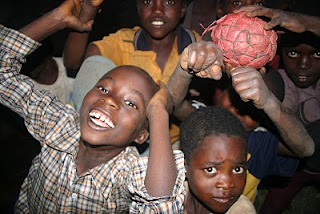
Similarly, Dr. Paul Frymoyer holds no political post, but his journey to Africa would have made any great leader proud. Some time ago, he travelled to Malawi for the second time with his wife, and practiced his profession among natives who often lacked the resources to afford medical attention. His skills and expertise came to great use, especially in the diagnosis of conditions like malaria and diabetes, and in the treatment of a large number of diseases among children and adults alike.

Indeed, Dr. Frymoyer did not lead people to war, or lift economies from upheavals, but he acted the way any leader would have and effected change in his own way.

Paul Frymoyer | Image Credit: frytravel.blogspot.com


For updates on Dr. Paul Frymoyer, visit this Facebook page.

Friday, August 3, 2012

Dr. Paul Frymoyer: A children's doctor

Dr. Paul Frymoyer appears to have a soft spot for children. The Manlius, New York-based physician specializes in pediatric nephrology, the study of renal disorders among children. Because the kidneys work as a filter for the body, it is imperative that they work well in children. Kidney problems diagnosed in children are often more traumatic to the body than in adults, as younger bodies, while stronger, are not yet fully capable of repair and regeneration.

Paul Frymoyer. Image credit: Frytravel.blogspot.com

Disorders in organs of the body inadvertently affect other parts of the body. General nephrology necessitates an understanding of internal medicine, or diseases in adults, thus requiring, on the doctor’s part, an in-depth understanding of diseases affecting both children and adults. Dr. Paul Frymoyer has put this specialization to good use when he visited the African country of Malawi, where adults and children alike are afflicted with the most serious illnesses known.

Paul Frymoyer. Image credit: Frytravel.blogspot.com

The physician travelled with his wife to the impoverished continent for two purposes -- to practice medicine in the capital’s hospitals and to immerse themselves in the local culture. The doctor’s first stop was the Crisis Nursery in Lilongwe, Malawi’s capital. He marvelled at how, despite very limited resources and in the absence of state-of-the-art facilities, all the children in the hospital, including the 22 orphans left there, appeared to be well-cared for and comfortable.

Paul Frymoyer. Image credit: Frytravel.blogspot.com

Later in his trip, Dr. Frymoyer visited two hospitals in the brush, where hundreds upon hundreds of patients came to avail of his team’s services. A good number of them were children, all afflicted with malaria, diarrhea, parasitic infections, and HIV.  

For more information about Dr. Paul Frymoyer’s work with children, visit this Facebook page.

Tuesday, July 3, 2012

Dr. Paul Frymoyer: A significant drop in the bucket

Dr. Paul Frymoyer is but one of thousands of doctors who, at a time in their careers, have dedicated time, energy, and professional expertise to the people of Africa. Several international organizations, among them the United Nations and Doctors without Borders, send several hundred doctors to various parts of Africa every year. Despite this influx, however, it appears that Africa’s health woes are multiplying as time goes by.

Paul Frymoyer. Image credit: Frytravel.blogspot.com

It appears, however, that others bask more in recognition of their charity than the doctors who postpone lucrative careers in cities in order to practice their noble professions. For many doctors who go to Africa, being a doctor is a job akin to that of a peacekeeper. Dr. Paul Frymoyer has been in that situation before. Luckily for the doctor, however, he did not encounter anything potentially fatal. In restive areas, the danger of death hangs over every hospital and clinic. Medical entities are often caught in the crossfire of fighting forces, especially when they respond to the call of duty and try to extend assistance to wounded combatants on either side. This happens every so often, and no small number of doctors’ lives has been lost under these circumstances.

Paul Frymoyer. Image credit: Frytravel.blogspot.com

Regardless of how long they stay, the doctors who come to Africa contribute significantly to saving lives in that troubled part of the world. Ironically, rarely are they recognized for these acts in the same way as celebrities who dole out cash donations for causes are hailed. Yet doctors continue to flow into the continent—one could only surmise that living by their oaths is rewarding enough.

Paul Frymoyer. Image credit: Frytrvel.blogspot.com

To read on Dr. Paul Frymoyer’s time in Africa, log on to this Facebook page.

Sunday, June 10, 2012

Paul Frymoyer: Phenomenal work in the Lilongwe Crisis Nursery

Paul Frymoyer image credit: frytravel.blogspot.com


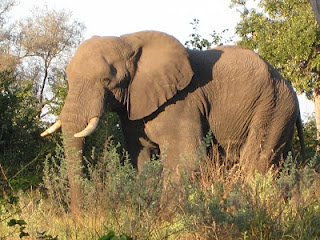
There are many things which Dr. Paul Frymoyer found memorable during his trips to Africa for his medical practice. Some were part of his work, like the visits to some extraordinary hospitals in Lilongwe; the others were part of his leisure time, like his African safari expedition.

Among the things that he found most memorable was the work done by the caregivers in the Crisis Nursery in Lilongwe, which was his group’s first stop. At the time of the doctor’s visit, the nursery had about 22 orphans below 2 years of age in its care.

Paul Frymoyer image credit: frytravel.blogspot.com


What made the Lilongwe Crisis Nursery stand out for the doctor was the exemplary work that its staff members had been doing and continues to do.

Dr. Paul Frymoyer noted in his journal how amazingly good the children looked as he examined them, which was particularly amazing considering how sick they were when they were first admitted to the nursery. During his visit, there was a child whose tests for HIV were still pending and there was one who was thought to have malaria. In spite of their conditions, however, they still looked pretty healthy.

Another thing that Dr. Frymoyer considered praiseworthy was how adept the nursery’s staff was in managing the limited resources available to them. The doctor noted that such a feat would not be possible had there been a lack of dedication and of the huge amount of love that the caregivers had for the children under their care.

Paul Frymoyer image credit: frytravel.blogspot.com


For more stories of Dr. Paul Frymoyer’s experiences in Africa, visit this Facebook page.

Wednesday, May 2, 2012

Paul Frymoyer on his experience of South African townships

Photo Credit: Paul Frymoyer

Paul Frymoyer, M.D., is a physician from Manilus, New York who travelled to Malawi to practice medicine. He has previously talked about his many experiences in Africa, from the rich culture of the Africans to his African safari adventure with his wife Carolyn. As he was there not merely as a tourist but primarily as a professional who was out to share his expertise, Dr. Frymoyer also witnessed what it was like for people living in Africa’s townships.

South Africa was famous for its townships but Dr. Frymoyer confessed that he and his wife did not actually see one on their trips to Johannesburg. Dr. Paul Frymoyer had heard quite a lot about the concept but it was not until he arrived in Cape Town that he was able to see a massive township, which was just around the airport.

Photo Credit: Paul Frymoyer
The term township and location are usually used to refer to often underdeveloped urban living areas that were reserved for non-whites (meaning: black Africans, Coloreds, and Indians) from the late 19th century until the end of Apartheid.

 Dr. Frymoyer shared that the townships he saw consisted of small shanties, placed on top of each other, located on unoccupied land. They were, he said, huge and went as far as the eyes can see in some cases and still somehow provided a sort of contrast with the rural poverty that he and his wife saw in Malawi.

Photo Credit: Paul Frymoyer
Fortunately, the South African government was doing a lot to try and replace townships with sturdier housing and it seems that there has been good progress on that end.  

Visit Dr. Paul Frymoyer’s Facebook page for more stories about his work in Africa.

Friday, March 30, 2012

Paul Frymoyer "gets down to work" in Africa

Paul Frymoyer is a physician based in Manilus, New York, and an alumnus of the Rensselaer Polytechnic Institute. He traveled to Africa twice to propagate better health practices and to treat the disease-stricken natives of Malawi.
From Paul Frymoyer
Together with his wife, Carolyn, he visited the Crisis Nursery in Lilongwe, home to 22 orphans under the age of two, most of who tested positive for HIV and malaria. Dr. Frymoyer, with his expertise in pediatric nephrology, helped the children get healed. He also visited the different villages of Lilongwe, where he was faced with numerous cases of malaria and parasitic infections. The people of Lilongwe were very grateful for his aid, as they have not seen a doctor in many months, because the villages become inaccessible during the rainy season.
From Paul Frymoyer
Paul Frymoyer also treated a lot of patients with diarrhea and pneumonia. Despite being exposed to the risk of contracting malaria, he and his wife remained steadfast in their mission to promote health, and took precautions through prophylactic medications and sleeping under a mosquito net. Cases of diabetes, hypertension, and heart disease are also rampant in the area, though not as bad as in the United States.
From Paul Frymoyer
Paul Frymoyer has nothing but wonderful words about his Malawi trip, because the people were “truly wonderful and extraordinarily grateful” to have them there. More about his trip to Africa and his professional experience can be found on his Facebook page.