Showing posts with label health. Show all posts

Tuesday, February 3, 2015

REPOST: Certain genetic variants may influence progression of kidney disease

A new study published in the Journal of the American Society of Nephrology suggests that patients who have variants in the apolipoprotein L1 (APOL1) gene are more likely to have an advanced form of focal segmental glomerulosclerosis (FSGS), a kidney condition characterized by scarring in the organ tissue, at the time of diagnosis. Additionally, African Americans are more likely to develop FSGS compared with European Americans, according to the research. The findings are discussed in the article below. 


The location of kidneys in the human body
The researchers found that 72% of African American participants with FSGS - a form of kidney disease - had variants in the APOL1 gene.

Image Source: medicalnewstoday.com

A new study suggests that patients with focal segmental glomerulosclerosis - a type of kidney disease - may have a more advanced form of the condition at diagnosis if they possess certain genetic variants, with this association being strongest among African Americans.

The researchers, including Dr. Jeffery Kopp of the National Institutes of Health, publish their findings in the Journal of the American Society of Nephrology.

Focal segmental glomerulosclerosis (FSGS) is scarring in kidney tissue that affects more than 5,000 people in the US every year. Symptoms of the condition include foamy urine (caused by excess protein), weight gain, swelling (caused by excess body fluids) and poor appetite.

According to the researchers, FSGS is known to be more common among African Americans; compared with European Americans, African Americans are four times more likely to develop the condition.
 
Previous research has indicated that African Americans are at higher risk of chronic kidney disease (CKD) due to variants in apolipoprotein L1 (APOL1) - a gene that makes a protein that forms a part of high-density lipoprotein (HDL), referred to as "good" cholesterol. Around 5 million African Americans possess such variants.

72% of African Americans with FSGS had variants in APOL1

For their study, Dr. Kopp and colleagues assessed how APOL1 variants influenced FSGS among 94 individuals of variety of ethnicities, including African American, Hispanic and European American.

From analyzing genetic data and health information for each participant, the researchers found those that had variants in the APOL1 gene were more likely to be at an advanced stage of FSGS when they were diagnosed with the condition. In addition, 72% of participants who identified themselves as African American were found to possess such variants.
 
The researchers also found APOL1 gene variants in two Hispanic participants and two European American participants; these variants have never before been reported in these ethnicities, according to the researchers.

Dr. Kopp and colleagues also tested medication response among individuals with APOL1 gene variants.

Past research has shown that people with two variants in APOL1 react to glucocorticoids - a class of steroid hormones - showing a reduction in the amount of protein secreted in urine. Many of these individuals, however, continue to progress toward kidney failure.

On testing cyclosporine and mycophenolate mofetil - immunosuppressant drugs used to prevent organ rejection after transplantation - among participants in this study, the researchers found they produced similar effects in subjects with APOL1 variants as glucocorticoids.

Commenting on this finding, Dr. Kopp says:
"New therapies targeting APOL1 injury pathways are needed, as standard therapies do not work for many people with this gene variant."
Overall, the researchers hope their study - described as reporting one of the strongest ever genetic associations for a common disease - helps to improve diagnosis and treatment of FSGS.
 
Commenting in an editorial linked to the study, Dr. Christopher Larsen, from Nephropath - a biopsy interpretation practice in Little Rock, AR - and Dr. Barry Freedman, of the Wake Forest School of Medicine in Winston-Salem, NC, describe the results from Dr. Kopp and colleagues as "informative."

They note, however, that the findings are not encouraging because the majority of individuals with variants in APOL1 experience poor outcomes.


Dr. Paul Frymoyer is a nephrologist practicing in Manlius, New York. Click here for interesting discussions on nephrology trends, issues, and research.

Tuesday, April 22, 2014

REPOST: In newest analysis for Human Microbiome Project scientists re-define what's healthy

What does it truly mean to be healthy? This article from Medical News Today tries to tackle the question by examining microbiome changes. 
As scientists catalog the trillions of bacteria found in every nook and cranny of the human body, a new look by the University of Michigan shows wide variation in the types of bacteria found in healthy people.

Image Source: telegraph.co.uk
Based on their findings in the journal Nature, there is no single healthy microbiome. Rather each person harbors a unique and varied collection of bacteria that's the result of life history as well their interactions with the environment, diet and medication use.

"Understanding the diversity of community types and the mechanisms that result in an individual having a particular type or changing types will allow us to use their community type to assess disease risk and to personalize their medical care," says lead study author Patrick D. Schloss, Ph.D., associate professor of microbiology and immunology at the U-M Medical School. 

Additional findings reveal bacteria can be grouped into community types that are predictive of each other.
"What was unexpected was that it was possible to predict the type of community a person had in their gastrointestinal track based on the community in their mouth," Schloss explains. "This was possible even though the types of bacteria are very different in the two sites."

Image Source: livescience.com
The Human Microbiome Project is the movement to understand how changes in the microbiome are associated with changes in health.

More than 200 scientists in the HMP consortium spent five years analyzing samples from nearly 300 healthy adults. The samples came from 18 different places on their bodies, including their mouths, noses, guts, behind each ear and inside each elbow.

Schloss and co-author Tao Ding, Ph.D, revealed it is possible to associate a limited amount of data from the subjects with their community type.

Whether a person was breastfed was associated with their gut community type, level of education was associated with the vaginal community type, and one's gender affected several body types as well.
For the study, U-M researchers were not able to associate any of the changes in community type with changes in health.

"What our data shows is that just because a person's microbiome is different doesn't make it unhealthy," says Schloss. "It demonstrates there's more to learn about the factors that cause one's microbiome to change."

Image Source: edbites.com
Understanding why community types change will be useful in developing therapies that can alter one's community type using pre- and probiotics, fecal transplants or antibiotics.
Dr. Paul Frymoyer’s views on health and healing were put to the test during a visit to Malawi, Africa, to provide medical treatment to its residents. Visit this Facebook page to learn more about breakthroughs in the field of medicine.

Sunday, March 9, 2014

REPOST: Toddler With Rare Kidney Disorder Beats Odds After Transplant Fails

A child born with a rare kidney disorder called Finnish type congenital nephrotic had managed to recover after the kidney transplant donated by her mother failed due to blood clot. ABC News reports on the toddler's surprising recovery.
Image Source: abcnews.go.com
 
Ayana Richards said she will never forget waking up in the hospital to find out that the kidney she donated to her 3-year-old daughter had failed.

The doctor came in two hours after initially telling Richards the transplant was a success to say that a blood clot had destroyed the new organ beyond repair.

“I remember him having tears in his eyes,” said Richards, who lives in New York City. “I have to take pause because that moment, I think, is one of the lowest points in my life I ever had.”

But the doctors at Mount Sinai weren’t willing to give up so easily.

Anaya –- which is Ayana Richards’s first name spelled backwards –- was born with a rare kidney disorder called Finnish type congenital nephrotic syndrome, an inherited disorder that caused her kidneys to “leak” vital proteins. Normal kidneys take in blood and sift out waste, which goes to the bladder and leaves the body as urine. Anaya’s kidneys were causing her to expel important proteins through her urine in addition to the waste. Since proteins are needed for everything from keeping blood from clotting inside the body to making the immune system function, Anaya’s health was in jeopardy.

“In the past, if you didn’t do anything, there’s no doubt she would have died as an infant,” said Dr. Jeffrey Saland, who cared for Mount Sinai’s Kravis Children’s Hospital, where Anaya would eventually get her transplant.

But neither Richards nor Anaya’s pediatrician knew Anaya had this disorder when she was born. After all, it’s common among people of Finnish descent, and Anaya was black and Hispanic.

“As a first-time mother, I didn’t know what to expect, just what she looked like,” said Richards, who was the first in her family to move to the United States from Trinidad and initially didn't have her mother around for guidance. “But you know that instinct. I just knew that something was wrong.”
Anaya cried a lot during her first two months of life, Richards said. She also threw up a lot and wasn’t as aware as Richards thought she should be.

But one day, the crying changed. It was piercing.

“I remember running her on foot to Harlem Hospital,” Richards said. “I knew the ambulance wouldn’t have been quick enough.”

That night, they relocated to New York Presbyterian Hospital, where doctors did a spinal tap and discovered that Anaya had bacterial meningitis. After a series of tests, they found out Anaya got meningitis because of the effects of her kidney disorder.

One doctor told Richards the disorder was so rare that she should be able to go outside blindfolded, play the lottery and win.

“He was trying to up my spirits, but I didn’t want to be lucky that way,” she said.

They sent Anaya home with a central line in her chest so Richards could give her regular infusions and injections of the proteins her kidneys removed. But the tube was prone to infection and clots because of Anaya’s condition.

“She needed a central line to live, but the central line could also cause something that can kill her,” Richards said, explaining that Anaya came down with several infections.

After Anaya got an infection that caused her head to swell to the size of a basketball, Richards started thinking about a kidney transplant to allow Anaya to live without the central line and its risks.

Richards took Anaya to Mount Sinai’s Kravis Children’s Hospital, where Saland was on the team that cared for her.

“We said the only way to prevent these issues is not to be in this situation anymore,” Saland said.

Read the full story here 


Dr. Paul Frymoyer is a nephrologist from Manlius, New York who has journeyed to Africa to provide medical services to poor communities. Check out his full profile here.

Monday, March 4, 2013

Are multivitamins necessary?

The concept of the balanced diet was promoted to ensure that people obtain the necessary amount of vitamins and minerals from their daily food intake. The reality is that a balanced diet is difficult to achieve, as the average adult finds himself hard-pressed to eat well amid a busy work week. Preying on the people’s fear of a weak immune system, supplement manufacturers suggest taking multivitamins– pills that promise to fulfill a person’s vitamin requirements by simply being swallowed.

Image Source: davitadiets.wordpress.com


One argument for the necessity of multivitamins can be summarized by the old adage, it is better to be safe than sorry Although medicine has progressed to a point where there is an available cure for virtually every common infection, parasites, bacteria, and strains of viruses still manage to evolve and spread. Vaccines are not always developed in time. With the constant threat of infection, adults are better off spending a few dollars on a bottle of vitamins than hundreds or thousands on hospital bills.

Image Source: cbsnews.com


The counterargument is that, despite possibly preventing disease, multivitamins do not protect against heart attack and stroke– two considerably more pressing conditions which most adults would rather prevent. When the cost that would go to purchasing multivitamins could instead go to preventing death by heart failure, the choice is clear.

Image Source: gandgvitamins.wordpress.com


Whether or not multivitamins are necessary is completely up to the person taking them. An unhealthy lifestyle, such as one with little sleep, can cause the immune system to seek a boost. In any case, before deciding to take multivitamins, one must always first consult a doctor.

Some adults refuse to take pill vitamins because of myths about kidney damage. Licensed nephrologist Paul Frymoyer, M.D., has guidelines about eating and living for a healthy kidney provided on this website.

Thursday, January 3, 2013

AIDS: Reduced infections in Sub-Saharan Africa but rising elsewhere

Image Credit: thejustlife.org


Scuttling the AIDS epidemic where it has been coasting most is probably every medical and healthcare professional’s global advocacy. Seven years ago, volunteers from Doctors Without Borders and medical doctors who have been on Sub-Saharan African missions to provide assistance to its impoverished ailing populations would have proffered a mix of panic and ruefulness in their situationers.


Currently, there are signs that interventions to curb the global AIDS pandemic are working in Sub-Saharan Africa. This area is still the most important region of concern, for it is the residence of 23.5 million global cases of HIV infection. An alarming percentage of victims are women who pass on the disease to their babies.


Image Credit: triplehelixblog.com


Seven years ago, too, the dismal toll of the yet incurable disease could have completely disheartened humanitarian movements. The slog to reduce morbidity from 1.8 million in 2005 to the now more optimistic figure of 1.2 million (2011 statistics) has taken painstaking efforts and donations from UNAIDS, non-profits, governments, CSR movements, and philanthropists. Another heave of global resources to salvage the most afflicted region in the world should be lined up for another push at the reduction of deaths and infections.


Yet, countering the silver lining in Sub-Saharan Africa is the push of AIDS to other regions of the world. Asia is alarmingly looking like the next emergency situation. Sadly, its rising toll is due not to extreme poverty but complacency in prevention. Sexual practices in the continent’s thriving sex work sector could be libertine about protection, while in some countries, contraception remains a taboo.


Image Credit: newsone.com


Consult this website for updates on Dr. Paul Frymoyer and other global medical and pathological trends.

Thursday, December 27, 2012

Defying patents: India forces debate on generic drugs

Image Credit: guardian.co.uk


Generic drugs should be any health worker’s favorite tools. Unfortunately, the world of medical aid missions is not resistant to the politics of drug pricing and distribution. Medical R&D practices have multiplied the world over, giving rise to affordable science. From the primordial knowledge soup of advanced medical technologies, no exclusive R&D results arise.


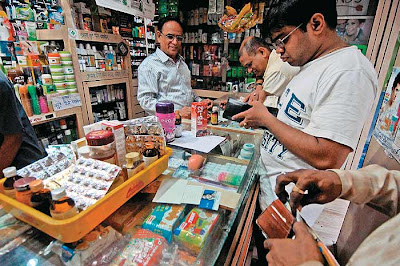
Stiff market competition among purveyors of high-demand drugs was the status quo until the advent of patents. Even then, emerging economies, such as India, are persisting with generic drugs production, naturally rankling huge pharmaceuticals. India offers some of the cheapest medicines in the world against cancer, tuberculosis, and AIDS. Its homegrown pharmaceutical industries were collectively worth USD 11 billion, and according to Le Monde diplomatique, it is set to inflate to USD 30 billion by 2020.


Image Credit: echoofindia.com


The medical profession isn’t homogeneous in its hawkishness, and humanitarian doctors have stepped up to the plate in the promotion of generic drugs. For instance, New York-based nephrologist Paul Frymoyer and Deane Marchbein of Doctors Without Borders, whose experience in giving medical aid in African missions opens to them the realities of epidemics and pandemics, could find recourse in generic drugs to push aid distribution far.


Image Credit: outlookindia.com


The reality is that the pharmaceutical industry is divided by its quest for profits and mission to equip the world with advanced medical solutions. India’s local, healthier pharmaceutical competitive market has evened out this contradiction, yet it remains at the behest of international trade agreements. The European Union, headed by President Juan Manuel Barroso, denounced India’s cheap drug exports, and resorted to supply seizures in what the World Health Organization considered as an abuse of counterfeit laws.


As a prominent nephrologist, Dr. Paul Frymoyer is especially concerned about new medical trends. Visit this Facebook page for more information.